
Toronto’s older houses were not designed around modern heating costs. Narrow semis, half-storey bedrooms tucked under the roof and flat-roofed additions all make it harder to keep heat where you want it. Attic insulation is still the starting point, but in a city house the attic is not always a simple open space.
Here is what works.
1. Figure out what kind of attic you have
An open attic with a hatch is the easy case. Many Toronto homes instead have sloped ceilings, knee walls or no accessible attic at all. Each needs a different approach, which we explain in insulating an old Toronto attic: what is actually different.
2. Top up open attics with blown-in insulation
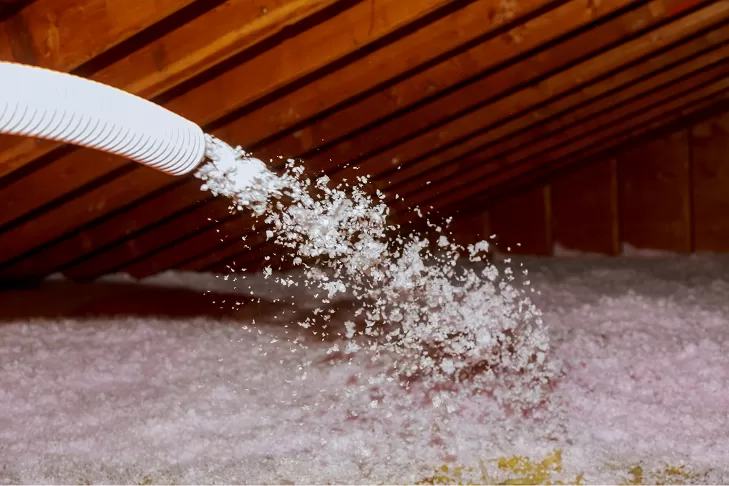
Where there is a proper attic floor, loose-fill is the most practical upgrade. Our attic insulation service in Toronto uses cellulose or fibreglass, blown to an even depth across the whole space.
3. Seal the bypasses that old houses are full of
Open wall cavities, old chimney chases and gaps around plumbing stacks act like chimneys for warm air. Natural Resources Canada’s Roofs and attics guide says these attic air leaks can account for substantial heat loss and lead to moisture problems. Seal them before insulating.
4. Treat flat roofs and cathedral ceilings differently
There is no attic to blow insulation into, so the insulation has to go in the roof assembly itself. See our post on spray foam for flat roofs, cathedral ceilings and basements and our spray foam insulation page.
5. Be careful with what is already there
Old attics can contain vermiculite, which Natural Resources Canada says should not be disturbed because some of it contained asbestos. Century homes also have wiring and framing that need a careful eye. Our article on attic insulation for Toronto’s century homes covers the precautions. Where old material is contaminated, attic insulation removal is the first step.
6. Keep the roof breathing
When insulation goes in, the vents at the eaves need to stay clear. Baffles do that.
7. Insulate solid or empty exterior walls
Natural Resources Canada notes that uninsulated walls can lose more heat than a typical attic. Where there is a cavity, drill and fill insulation fills it without tearing out plaster.
8. Quiet the shared wall while you are at it
If you live in a semi or a row house and are opening walls anyway, Safe and Sound insulation helps with noise. It is a comfort upgrade of a different kind, but it is cheapest to do during other work.
9. Tighten up windows and doors
Original wood windows leak. Weatherstripping, caulk and a door sweep are inexpensive and reversible. Natural Resources Canada’s materials guide explains the options.
What to expect
The U.S. EPA estimates 15% average savings on heating and cooling from air sealing and adding insulation in attics, floors over crawl spaces and basements (ENERGY STAR). The figure is modelled on typical U.S. homes. An old, leaky house may do better or worse depending on how much can be reached.
Rebates
Find out whether your Toronto home qualifies for the attic insulation rebate or see our energy rebate page.
Start with a look
Check the signs your Toronto attic needs an upgrade before winter, then contact us for an estimate.