
Toronto’s housing is a mix of very different attics. Victorian and Edwardian semis and rowhouses in Leslieville, Riverdale, the Annex and Roncesvalles often have shallow, cramped attic spaces with little room for insulation or airflow. Postwar bungalows across Scarborough, Etobicoke and North York have simple attics that were insulated decades ago and may never have been updated.
Whatever the house, attic mould in Toronto follows the same pattern: moist air gets in, can’t get out, and condenses on cold wood.
Why Toronto Attics Get Mould
- Shallow attics. In many older semis and rowhouses, the attic is barely a crawl space. There’s little room for insulation, and air can’t move freely.
- Shared walls and roofs. In semis and rowhouses, ventilation and air sealing may differ from one side of the roofline to the other.
- Air leaks from renovations. New pot lights, bathrooms and wiring often add holes in the ceiling that were never sealed.
- Exhaust fans into the attic. A common shortcut in older renovations.
- Old, settled insulation in postwar bungalows that no longer keeps heat in.
Winter: Condensation Under the Roof
In winter, warm, humid air rises into the attic and condenses on the cold roof boards. In a shallow attic, there’s very little space for moisture to spread out or dry, so it collects quickly. On cold mornings, it freezes into frost.
Signs to watch for:
- Ice dams or heavy icicles along the eaves
- Snow melting faster on your roof than on your neighbour’s
- Frost visible through the attic hatch
If your roof is bare while the rest of the street is snow-covered, heat is escaping into your attic.
Spring: Stains and Smells
When temperatures rise, that frost melts. Toronto homeowners often notice:
- Water stains on top-floor ceilings
- A musty smell in upstairs rooms
- Peeling paint or bubbling drywall near the ceiling
- Dark spotting on the roof boards if the attic can be reached
In shallow attics, homeowners may never see the mould directly. Stains and smells are often the only clues.
Summer: Hot, Humid and Trapped
Toronto summers can be hot and humid. A shallow, poorly ventilated attic heats up fast and holds humidity. Top-floor bedrooms become hard to cool, and air conditioning ducts in the attic can sweat if they aren’t sealed and insulated.
Fall: Get Ahead of Winter
- Clean eavestroughs, especially under mature street trees
- Confirm bathroom fans vent outside
- Seal and insulate the attic hatch
- Check that insulation isn’t blocking soffit vents
- Book an attic inspection before the first freeze
How Attic Mould Is Treated in Toronto Homes
1. Assess the extent. Health Canada considers mould under about 1 square metre a small area. A single patch over about 3 square metres is large and should be handled by a qualified professional.
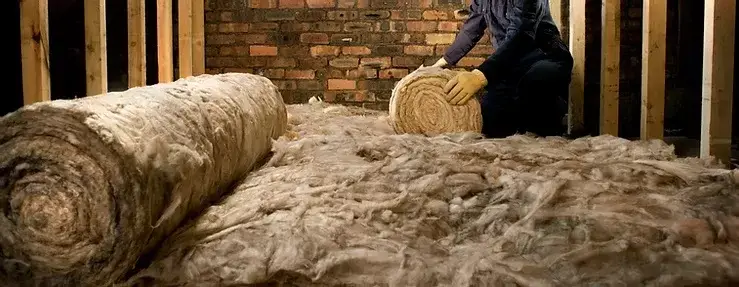
2. Remove contaminated insulation. Our attic insulation removal service in Toronto uses vacuum equipment that works well even in tight attics.
3. Clean the wood. Surface mould is cleaned and the wood dried. Rotted boards may need a roofer.
4. Seal and ventilate.
- Air seal ceiling penetrations from lights, wires and plumbing. In homes where the attic is hard to reach, AeroBarrier air sealing seals leaks from inside the house.
- Install baffles to keep soffit vents open.
- Vent exhaust fans outdoors.
- Add a vapour barrier where needed.
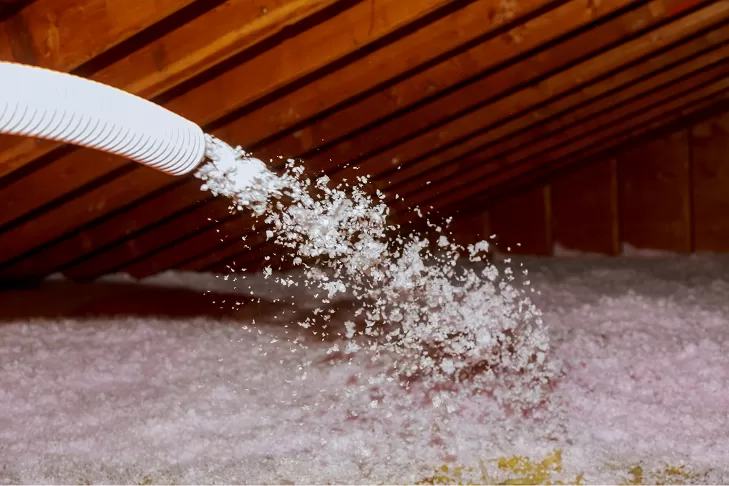
5. Re-insulate. In shallow attics, cellulose blown-in insulation fills tight spaces well. Fibreglass blown-in is another option. For flat roofs, sloped ceilings or very tight spots, 2 lb closed-cell spray foam insulates and air seals at once. See all spray foam insulation options in Toronto.
Replace damaged ceilings, and use moisture-resistant drywall in bathrooms.
Prevention Checklist for Toronto Homeowners
- Seal ceiling penetrations, especially after renovations
- Keep soffit airflow open
- Vent every fan outdoors
- Insulate to current levels (attic insulation in Toronto)
- Watch your roof after snowfall for fast melting
- Inspect in spring and fall
Air sealing and insulation may qualify for rebates. See our home renovation rebate page.
Frequently Asked Questions
My attic is too shallow to get into. How do I know if I have mould?
Look for ceiling stains, musty smells, ice dams and fast-melting roof snow. A contractor can inspect through the hatch or a small access point.
Does my neighbour’s attic affect mine in a semi?
It can. Shared roofs mean airflow and moisture problems on one side can affect the other.
Can attic mould be fixed without opening ceilings?
Often, yes. Many attics can be cleaned, sealed and re-insulated from the attic side. Damaged drywall below is the exception.