Toronto homes come in every shape: Victorian semis in Cabbagetown, 1920s detached houses in the Danforth and the Junction, post-war bungalows in Etobicoke and Scarborough, and row houses on narrow downtown lots. What many of them have in common is age, and with age comes thin insulation, drafty gaps and a furnace that works far harder than it should every January.
If you want a warmer home this winter without running your heating system into the ground, here’s where to focus.
Older Toronto Homes Leak Heat From the Top Down
Warm air rises and escapes through the top of the house: the attic, the ceiling, and the gaps around chimneys and plumbing stacks. Cold air is then drawn in through the basement and around old windows and doors to replace it. In an older home, this airflow never really stops, and the furnace keeps reheating air that’s on its way out.
Cutting off that flow at the top is the most effective first step.
1. Upgrade the Attic, Even a Tricky One
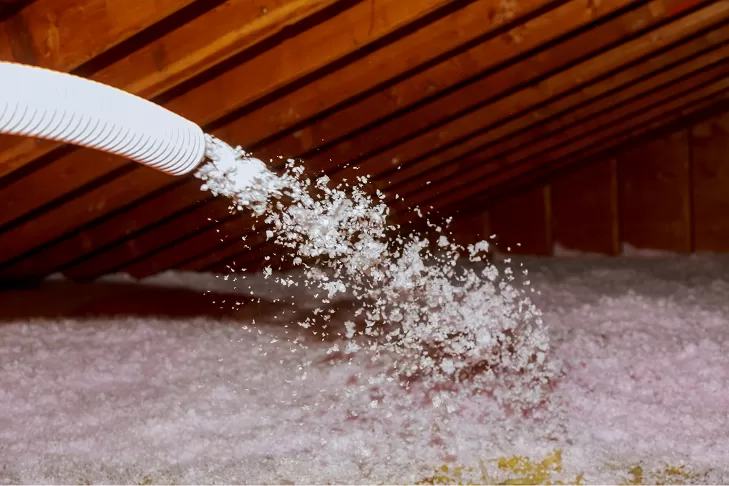
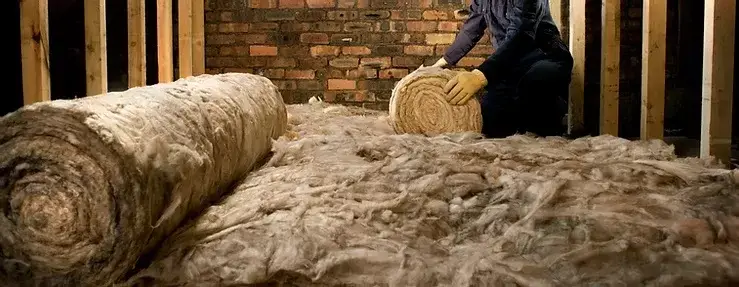
Many Toronto attics are small, low or awkward to reach. Some have barely any insulation; others have old material that has settled to a fraction of its original depth. Attic insulation in Toronto is usually the biggest single improvement you can make, and blown-in insulation can fill tight spaces that batts can’t.
- Blown-in cellulose: denser, slows air movement well, roughly R-3.4 to R-3.8 per inch.
- Blown-in fibreglass: lighter and often less expensive, roughly R-2.7 to R-3.0 per inch.
Ontario’s attic rebate program targets R-50, roughly 13 to 15 inches of cellulose or 17 to 19 inches of fibreglass. If you find old, contaminated or mouse-damaged insulation, attic insulation removal should come first. And keep the roof edges ventilated with baffle installation so the attic doesn’t trap moisture.
Homes With Flat Roofs or Cathedral Ceilings
Not every Toronto home has a walk-in attic. Flat-roofed additions and cathedral ceilings have their own insulation approaches and their own rebate tiers under the provincial program. If that sounds like your home, ask during your assessment.
2. Seal the Chimney Chase, Hatch and Ceiling Gaps
Older homes have more hidden leaks: gaps around old chimneys, unsealed plumbing and wiring holes, and attic hatches that were never weatherstripped. Sealing them before adding insulation makes everything work better. For a whole-house approach, AeroBarrier air sealing seals leaks from the inside.
3. Fill the Empty Walls
Many pre-war Toronto homes have brick walls with little or no insulation. Drill and fill insulation adds insulation to closed walls through small holes, without taking down plaster.
4. Stop the Basement Draft
Old foundations, rim joists and basement windows are a major cold-air entry point. Spray foam insulation on rim joists and foundation walls insulates and seals at the same time.
5. Simple Habits That Help Today
- Close the fireplace damper when it isn’t in use.
- Hang heavy curtains on older single-pane or leaky windows.
- Use draft stoppers at the bottom of exterior doors.
- Set the thermostat back a few degrees overnight instead of turning it up and down sharply.
- Keep radiators and registers clear of furniture.
Rebates Available to Toronto Homeowners
The Home Renovation Savings attic rebate pays up to $1,250 for bringing an attic to R-50, with no energy assessment required. It’s open to detached and semi-detached homes and row houses, but not stacked townhouses, and gas-heated homes must be Enbridge Gas customers. The attic-only rebate must be completed by a participating contractor.
If you’re planning several upgrades, such as attic, walls and basement, the assessment-based path offers more: up to $1,500 for attic insulation and up to $7,700 across all insulation upgrades. The program is currently extended to November 30, 2026. Our Toronto rebate page explains how it works.
Frequently Asked Questions
My attic is tiny. Can it still be insulated?
Usually, yes. Blown-in insulation is well suited to tight attics because it’s sprayed into place rather than laid by hand.
Do semi-detached homes qualify for the attic rebate?
Yes. Semi-detached homes and row houses are eligible. Stacked townhouses and homes occupied for six months or less are not.
What should I upgrade first in an old house?
Start with the attic and air sealing at the top of the house, then move to the basement and walls. That order usually gives the biggest comfort improvement first.
Book Your Toronto Attic Assessment
Pro Insulation Contracting will measure your attic, check for leaks and explain your options before you commit to anything. Request a free estimate or call (416) 315-0471.